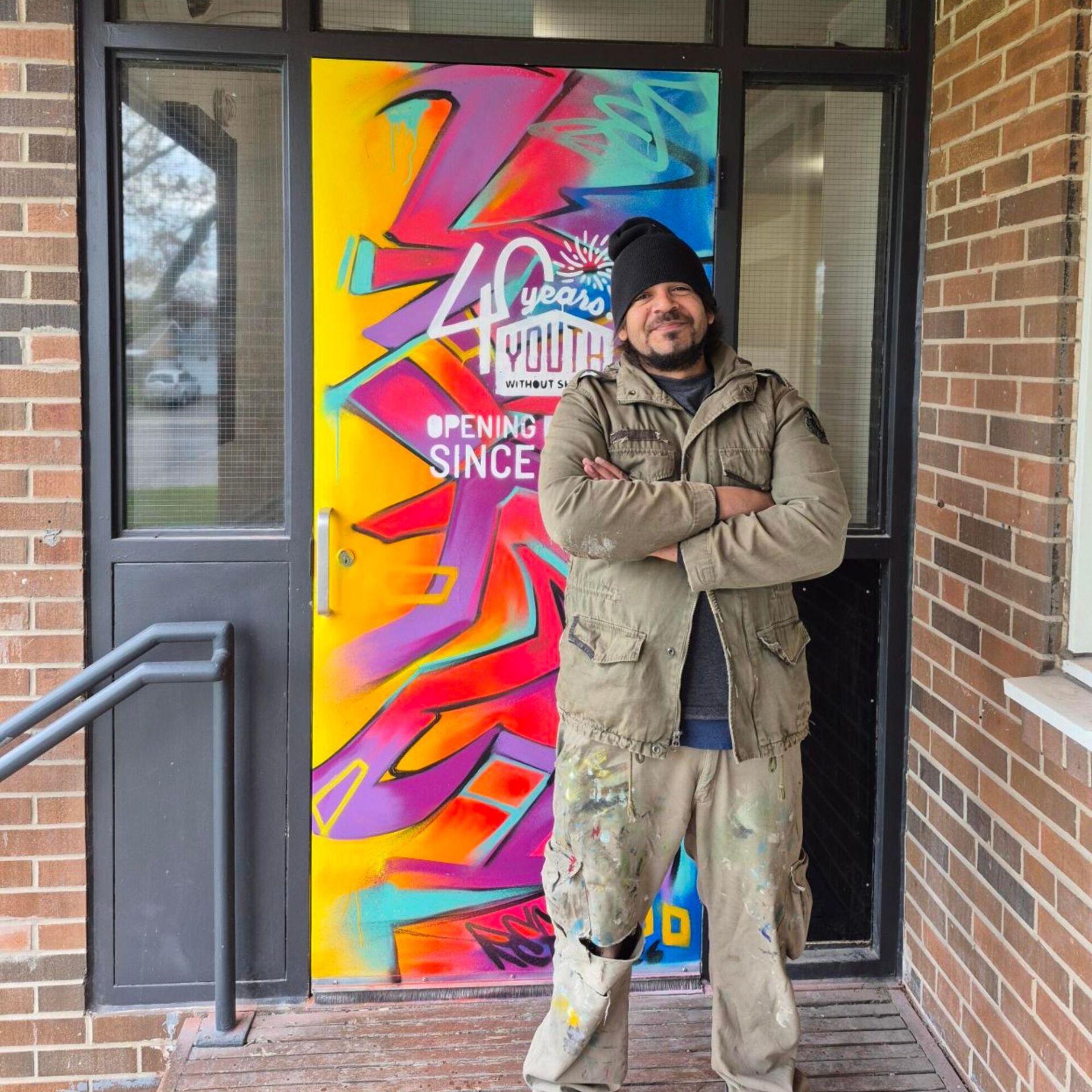
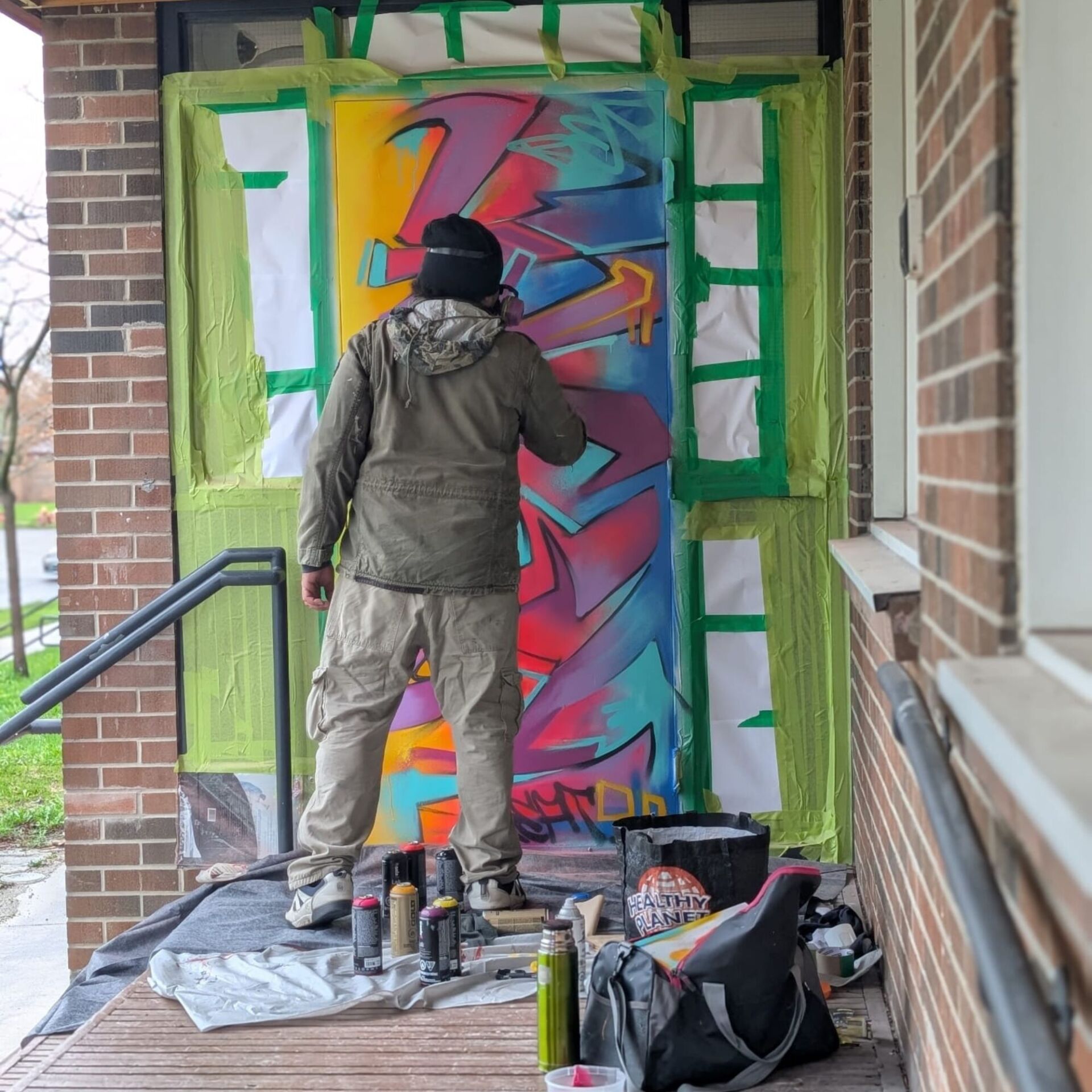
We’re so excited to share this feature on Renier, an incredible artist we’ve had the privilege of working with over the past few years, originally connected to us through Arts Etobicoke. In May 2026, Renier joined us to help bring new life to one of the most meaningful parts of our space, the original Youth Without Shelter door, the very threshold where the first youth in our care stepped through in 1986. It was an honour to collaborate with him on such an iconic piece of our history, and to see his vision help celebrate 40 years of opening doors for youth.
To learn more about his journey as an artist, his creative process, and the importance of community-based work, we connected with Renier for a short interview. He shared insights into how he began in graffiti and street art, what inspires his practice, and why projects like this one hold such meaning for him.
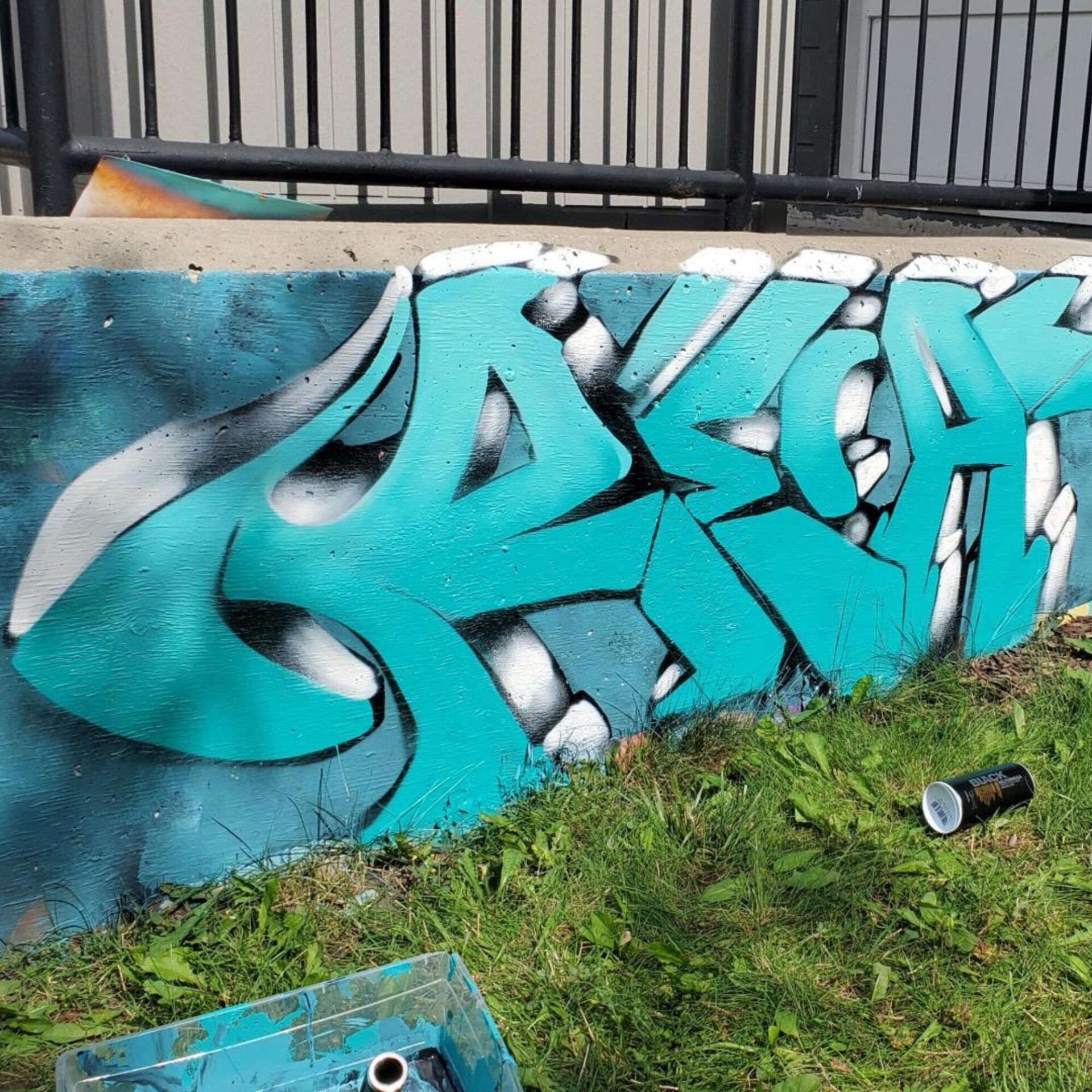
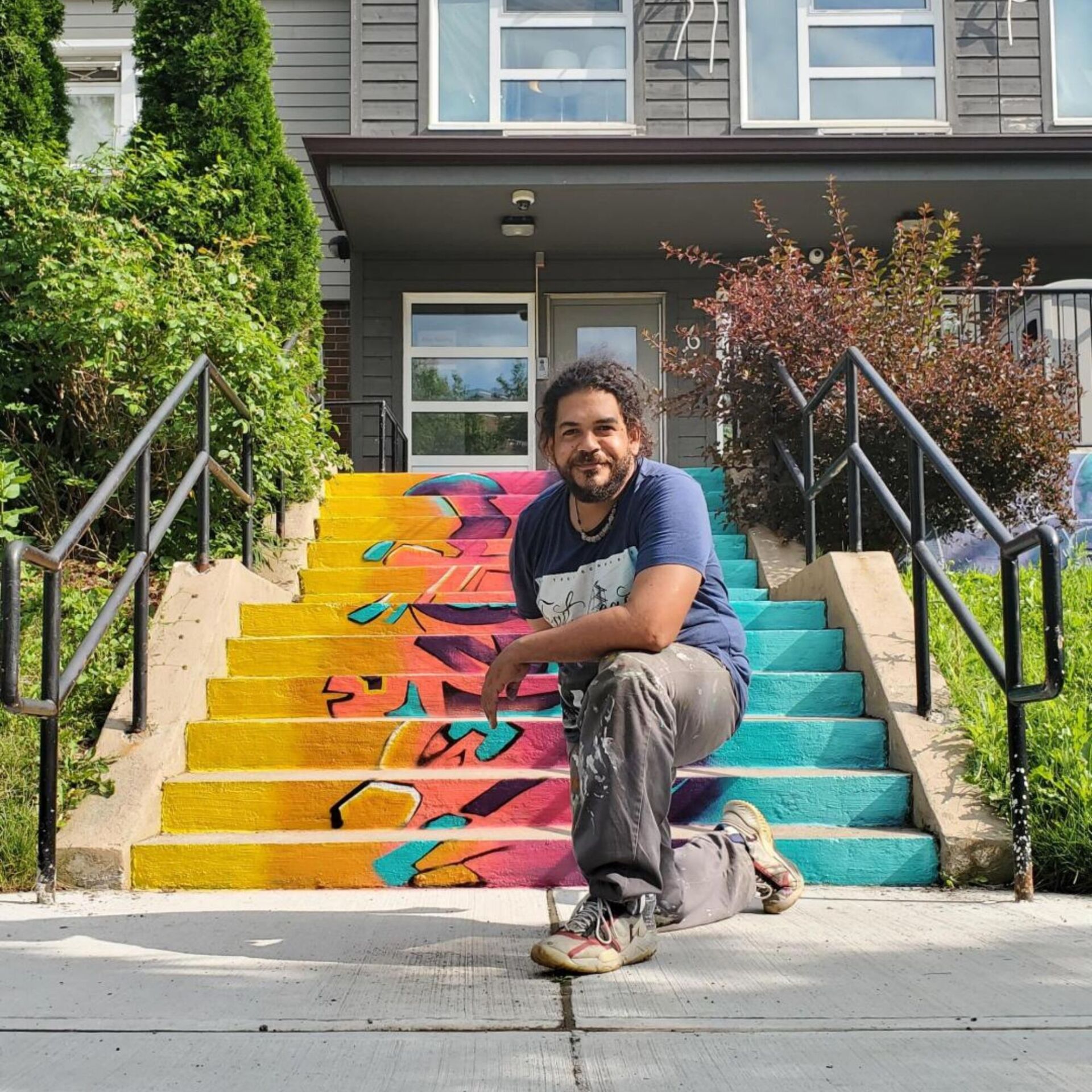
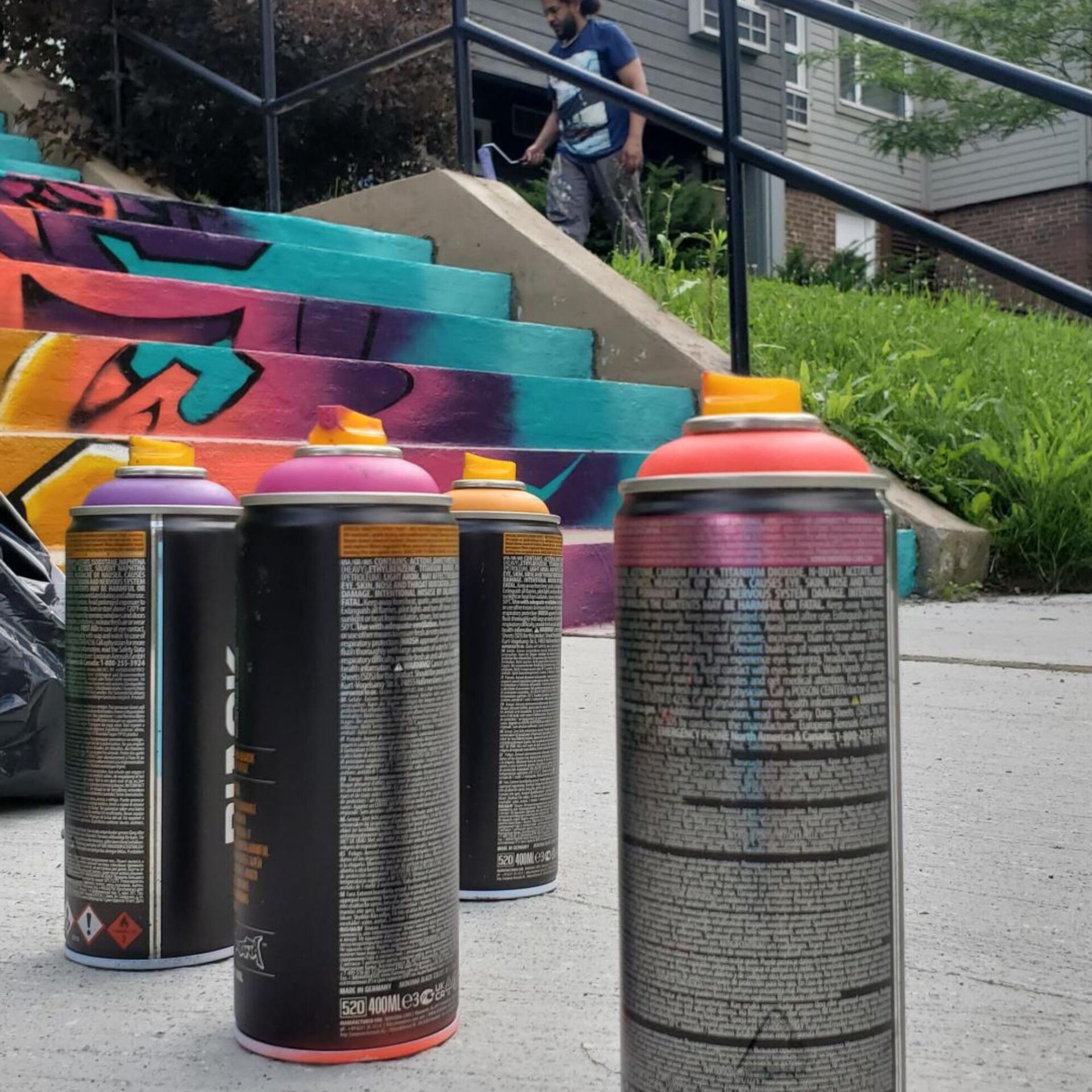
Graffiti and street art are often misunderstood or associated with negative stereotypes, yet your work brings so much beauty, storytelling, and connection into community spaces. What drew you to this artistic medium, and why do you love working with it so much?
I’ve always been interested in visual arts; however, I started writing graffiti in sixth grade when I began seeing local murals created by legendary artists like The Amazing SKE and BLEN, two of the best graffiti artists in Puerto Rico. I have always been more interested in painting wildstyle pieces, as well as backgrounds and characters, and to be able to create this kind of work, you need to study and practice a lot. I decided that if I loved it enough, why not dedicate myself to expanding what I had already learned about street art? I was right about that. As soon as I entered the Caribbean’s visual arts university, “Escuela de Artes Plásticas y Diseño,” my work evolved, and so did I as an artist. It was the beginning of my professional journey.
You’ve helped transform several spaces at YWS, from the iconic front stairs to the Stay in School office, and now the original 1986 YWS door. What has it meant to you to use your art to help tell the story of organizations and communities like ours?
To me, being able to collaborate with organizations like YWS is beyond what I would have expected. Community art is extremely important for the development of communities and the people within them. I feel honoured to be chosen to represent them during anniversaries and special events. It reminds me that my work has an important contribution to make, not only to my career, but also to my life.
A lot of your work focuses on bringing life, colour, and connection into community spaces. What do you hope people feel when they experience your murals and public art projects?
I would love to create emotion within a space and an aesthetic environment that encourages people to contemplate what has been created. I always try to challenge myself throughout the process by asking, “How can I make this better in my own way?” The result is usually satisfying, but art is subjective to each viewer’s experience, so it is difficult to judge. That’s why I try to focus on using the Elements of Art and Principles of Design in a functional way.
You’ve supported a number of organizations and community initiatives through your work. Can you share more about some of the other projects you’ve been involved in and why creating community-centred art is important to you?
A few years ago, I participated in a Community Arts project for the 50th Anniversary of Arts Etobicoke, where we focused on creating a collective mural with the community. Many of the participants were local residents from the area. They all collaborated in both the creation of the mural and the design process itself. I believe community art is about inclusion and diversity, understanding the community as a whole, and being able to share with others what you would normally create on your own.
To truly build community, you cannot be selfish or unwilling to be flexible when collaborating. In unity, we find strength.