One Project at a Time
At Youth Without Shelter, we believe that creating lasting change begins with awareness – and sometimes, that awareness starts in a classroom.
This spring, a group of York University students partnered with YWS as part of a social enterprise design project, exploring the realities of youth homelessness in Etobicoke. Through months of research, conversations with our team, and creative storytelling, they developed a campaign to challenge misconceptions, raise awareness, and give back to the community through a student-led fundraising initiative.
We sat down with the team to learn more about their experience, what they discovered about youth homelessness, and how the project changed their perspective. Here’s what they had to say!
Can you tell us a bit about the project you were working on for school? What was the assignment, and what were you asked to create or explore?
This project was part of our Social Enterprise Design course, where we had to explore a real-world social issue and develop a meaningful response to it. We focused on youth homelessness, more specifically in Etobicoke. Over three months, we had to research this social challenge, partner with a local organization, conduct interviews, and create awareness-driven T-shirt designs. We then had to fundraise through selling those shirts on campus and donate all proceeds to the organization, concluding the project with a final report reflecting on our impact and learning.
Why did you choose Youth Without Shelter for your project? Was there something about the organization or its mission that stood out to you?
Originally, we chose Youth Without Shelter because of its location in Etobicoke, which aligned with our decision to focus on youth homelessness within that specific community. This made our research more place-based and relevant, allowing us to better understand the local context rather than looking at the issue in a broad or abstract way.
We then noted YWS’ strong focus on providing not just immediate shelter, but also long-term support and stability for youth.
What stood out to us was the organization’s emphasis on dignity, individualized care, and helping young people transition toward independence.
What did you learn about YWS or youth homelessness while researching for this project? Was there anything that surprised you or changed the way you think about the issue?
Through our research and direct engagement with YWS, we learned that youth homelessness is often the result of multiple overlapping factors, including family conflict, experiences of trauma, mental health struggles, and gaps in social support systems. In Etobicoke specifically, we found that access to affordable housing and youth-specific services can be limited, making organizations like YWS even more critical.
One of the most important takeaways was how structured and intentional the support systems at YWS are. Programs are not just reactive—they are designed to help youth build routines, develop skills, and gradually transition toward independence. We also learned that many youth staying at YWS are actively working, attending school, or participating in programs, which challenged the stereotype that homelessness is linked to a lack of effort or motivation.
What surprised us most was the emotional and psychological impact of homelessness, particularly the sense of isolation and invisibility that many youth experience. Hearing firsthand perspectives made the issue feel much more human and immediate, shifting our understanding from statistics to lived experiences. This changed how we view homelessness—not as a short-term situation to “fix,” but as a complex process that requires consistent support, trust, and community.
You created three T-shirt designs as part of your project. What was the inspiration or thought process behind each design? What message were you hoping to communicate?
Each design was created to reflect a different dimension of youth homelessness and to communicate ideas we developed through our research and conversations with Youth Without Shelter.
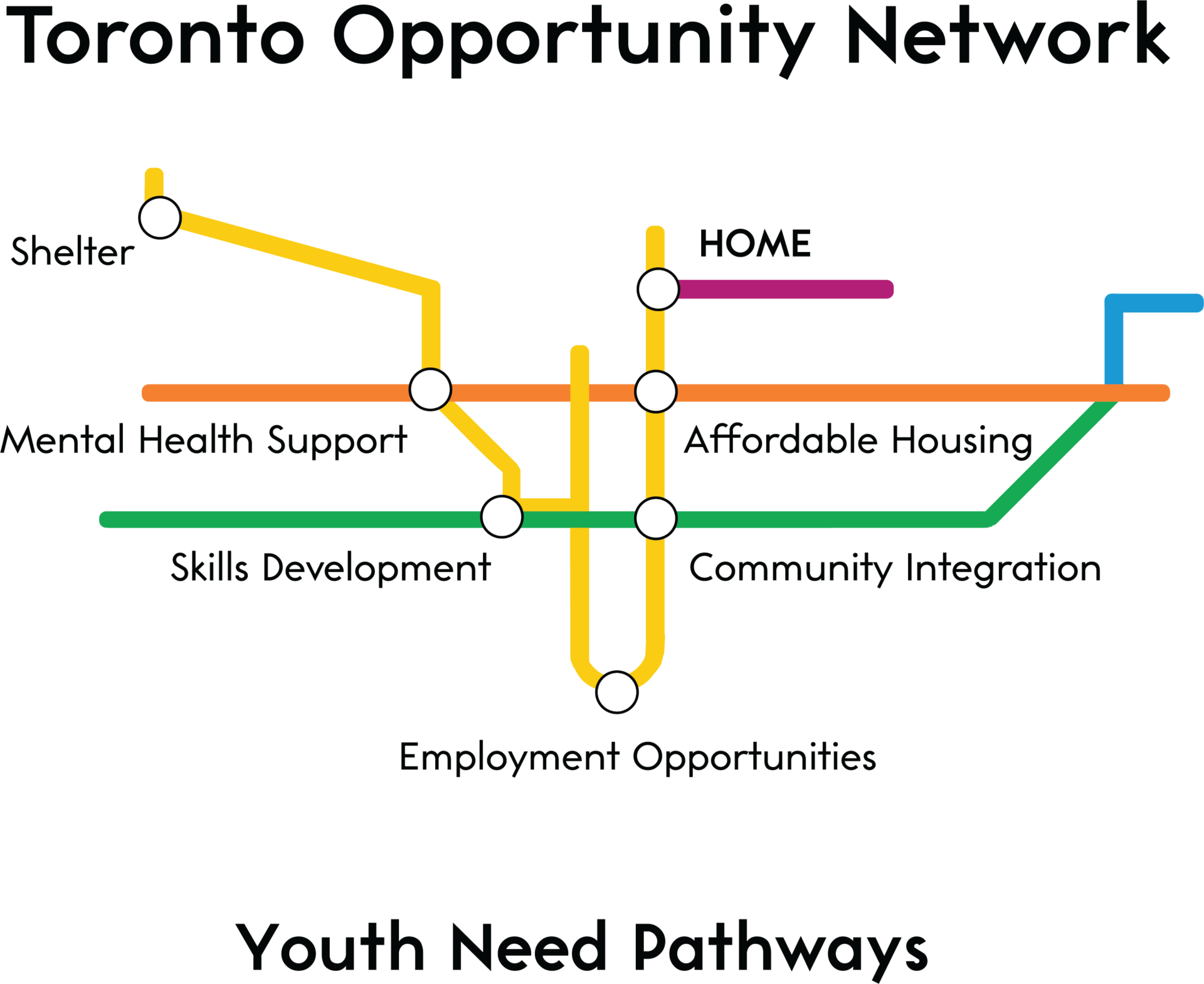
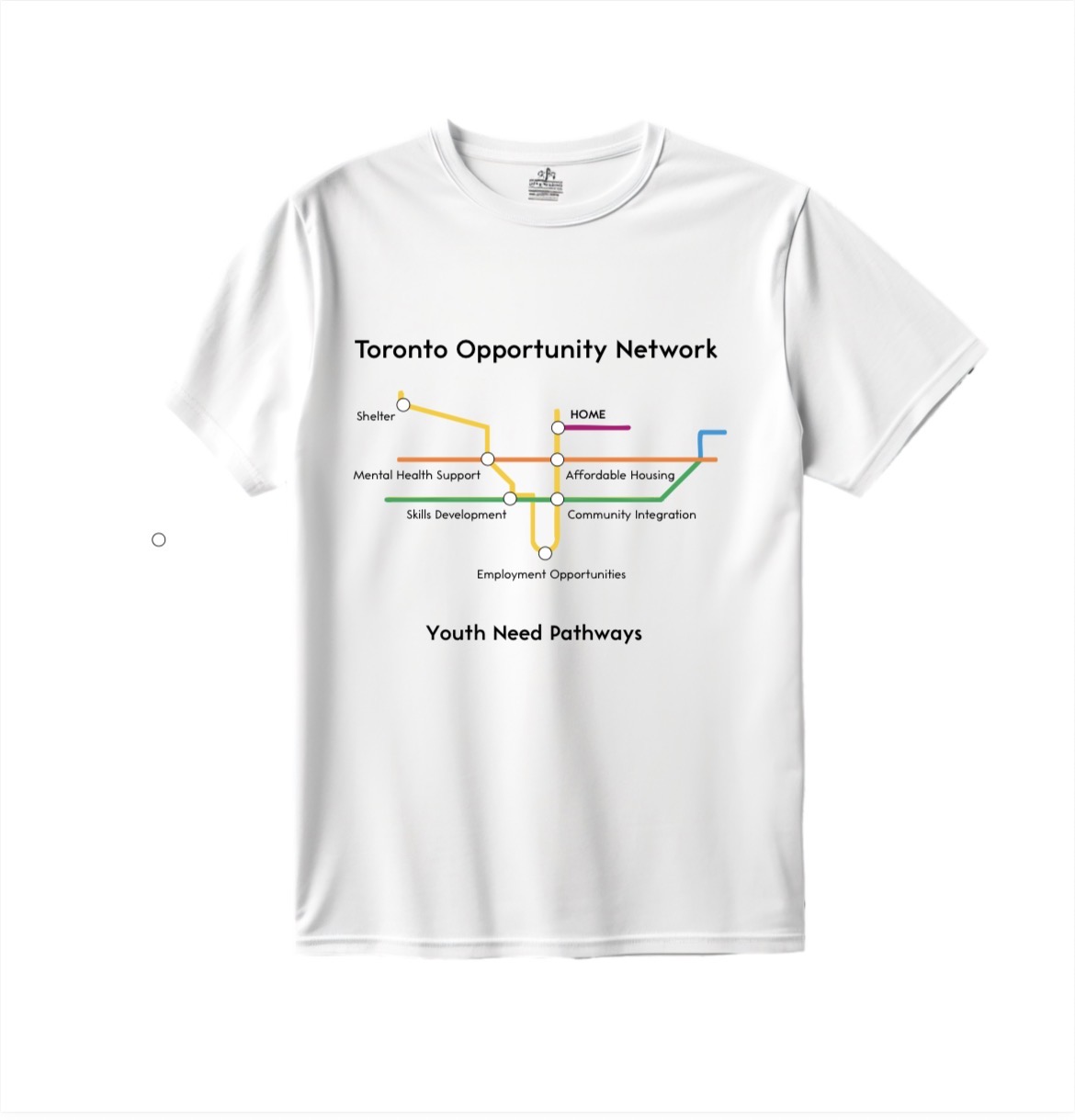
“Pathway Home”: This design uses a Toronto subway map as a metaphor, with stations labeled Mental Health, Shelter, Community Support, and Employment Opportunities. The idea was to show that finding stability is not a single step, but a journey that requires navigating multiple systems and supports.
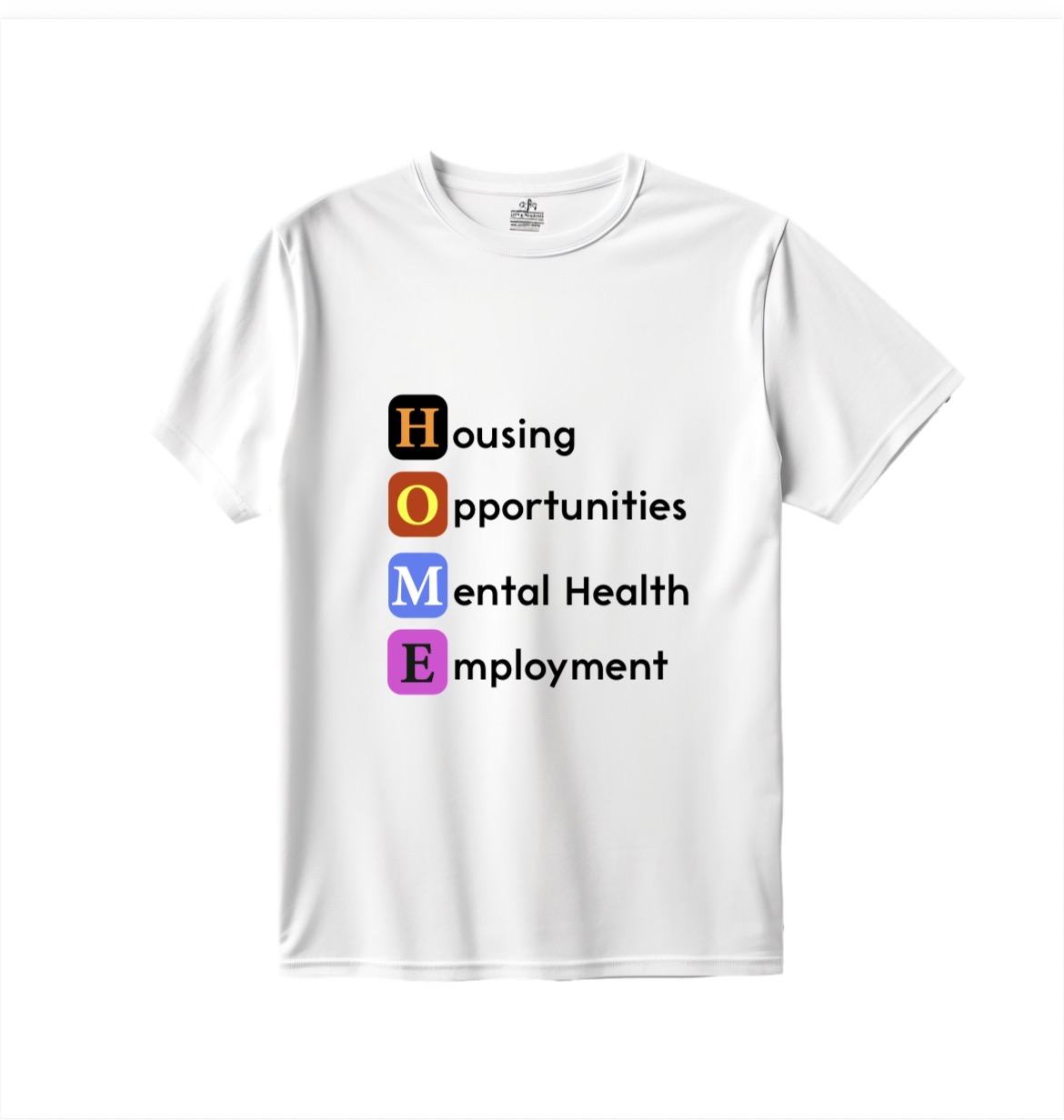
“Home is a System”: This design centers on the acronym H.O.M.E (Housing, Opportunities, Mental Health, Employment). It highlights that “home” is more than just a physical space—it’s a combination of interconnected supports that work together to create long-term stability.
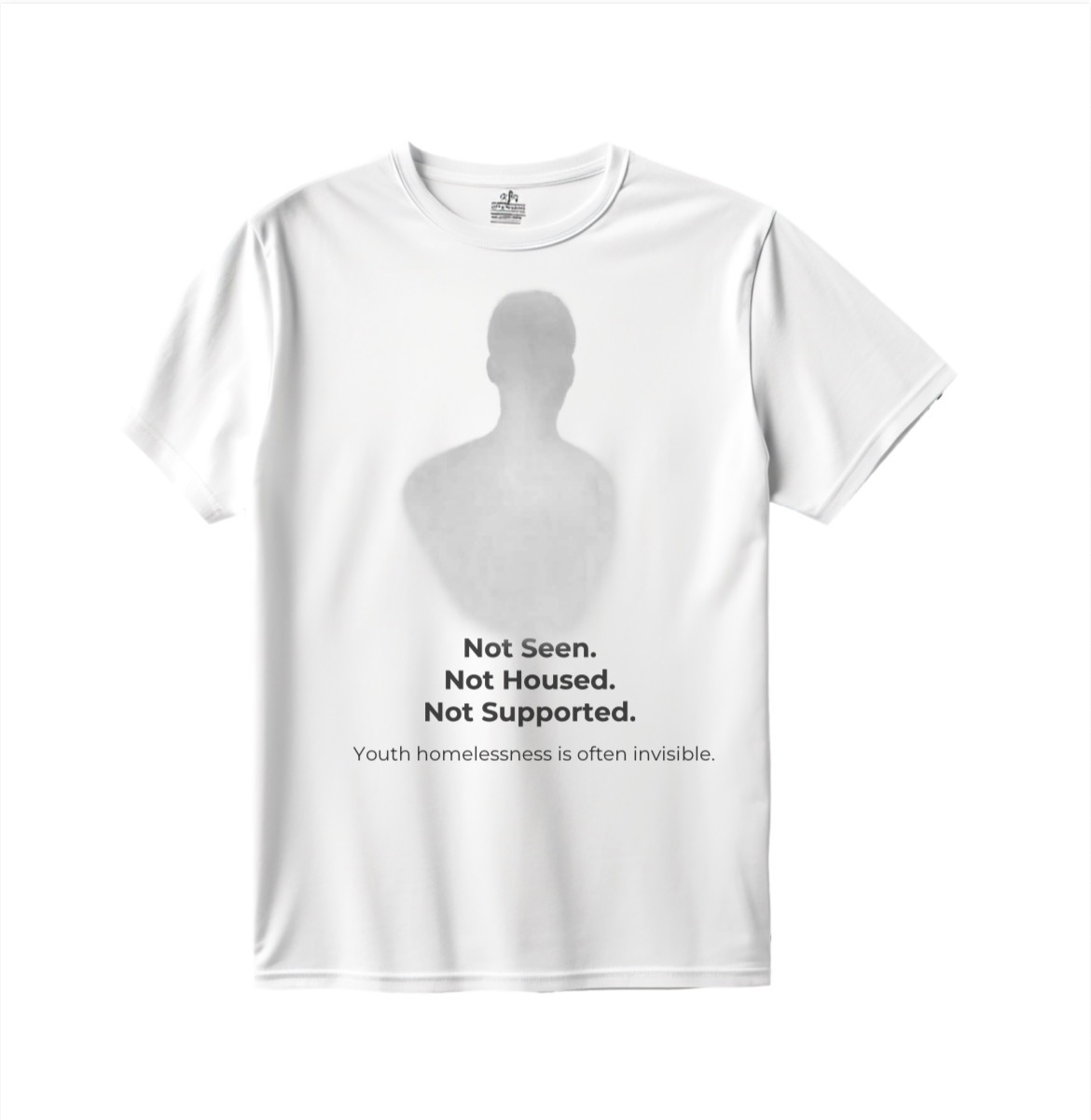
“Invisible Youth”: This design features the silhouette of an unseen young person with the slogan “Not Housed. Not Seen. Not Supported.” It was meant to emphasize how youth experiencing homelessness are often overlooked or ignored, and to bring attention to their visibility and need for support.
We ultimately chose to move forward with the “Invisible Youth” design because it was the most emotionally impactful and directly connected to what we heard during our visit. One of the YWS workers, Jen, shared that when she experienced homelessness herself, she often felt invisible. That insight deeply resonated with us and shaped our decision, as we felt this design most powerfully captured a lived experience and could create a strong emotional connection with others.
Overall, our goal across all three designs was to raise awareness, challenge common assumptions, and encourage people to think more deeply about the realities and complexity of youth homelessness.
After working on this project and visiting YWS, what message would you want other young people to understand about youth homelessness or organizations like YWS?
After working on this project and visiting YWS, we want other young people to understand that youth homelessness is complex and often caused by factors like family conflict, mental health challenges, and lack of support—not personal choice.
We also learned that many youth experiencing homelessness are actively working toward stability through school, jobs, and support programs, and should not be defined by their situation. Organizations like YWS play a crucial role by providing not just shelter, but the structure, resources, and support needed to rebuild independence.
Our main message is that greater awareness and empathy matter, and even small actions can help challenge stereotypes and support meaningful change.
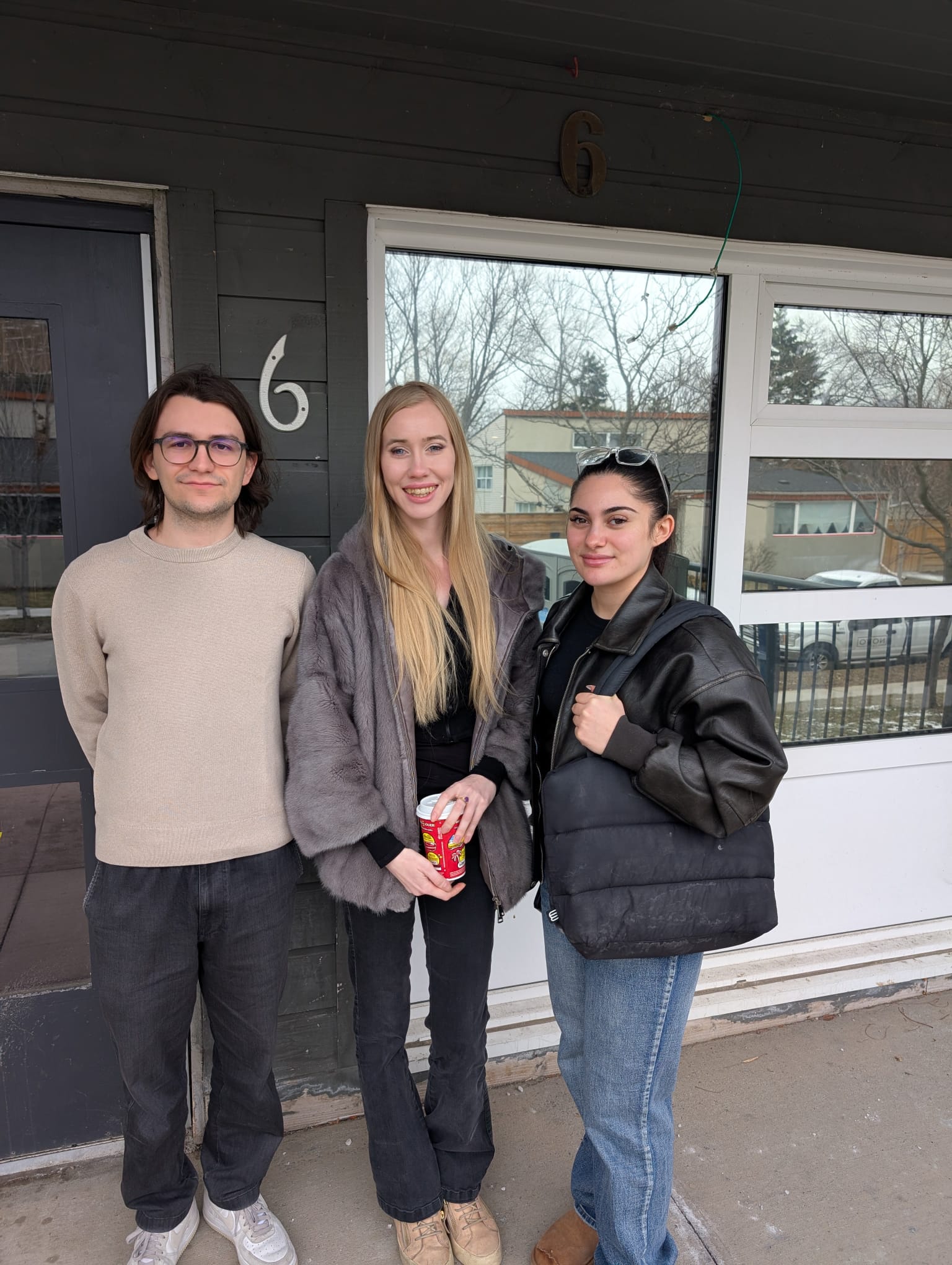
This project is a wonderful example of our Youth4Youth (Y4Y) philosophy in action – young people using their voices, creativity, and compassion to support their peers and create meaningful change within their community!
From all of us at YWS, we’d like to extend our heartfelt thanks to these students for their dedication, thoughtful research, and commitment to raising awareness about youth homelessness. Through their advocacy and creativity, they not only sparked important conversations but also raised more than $650 to support youth at YWS! Their efforts are a powerful reminder of the impact young people can have when they come together to support one another.
Learn more about our Youth4Youth (Y4Y) program below and discover how young people can make a difference by supporting their peers.